
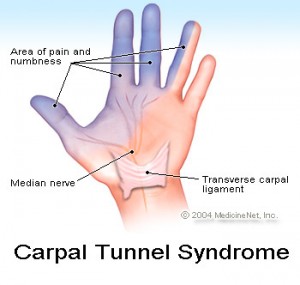
 Carpal Tunnel Syndrome commonly referred to as CTS, occurs when the median nerve, which is located just above the wrist, is pinched or inflamed. The carpal tunnel is at the base of the palm of your hand and is made of bones, tendons, and a thick ligament that surround the median nerve. The pinching is a result of sustained activities like typing, hammering, or pushing. Many believe that constant repetitive use of the hand causes the problem. Although an injury such as a broken wrist or a dislocated hand bone harms the nerve as well. In some cases the carpal tunnel is smaller in some peoples’ hands and leads to a higher likelihood of CTS occurring.
Signs and symptoms of CTS include:
- Nighttime painful tingling in one or both hands, frequently causing sleep disturbance
- Feeling of uselessness in the fingers
- A sense that fingers are swollen even though little or no swelling is apparent
- Daytime tingling in the hands, followed by a decreased ability to squeeze things
- Loss of strength in the muscle at the base of the thumb, near the palm
- Pain shooting from the hand up the arm as far as the shoulder
The carpal tunnel is filled with tendons (bundles of collagen fibers that attach muscle to bone) that control finger movement. Tasks requiring highly repetitive and forceful movements of the wrist can cause swelling around the tendons, resulting in a pinched nerve and producing CTS.