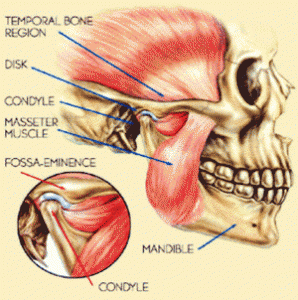
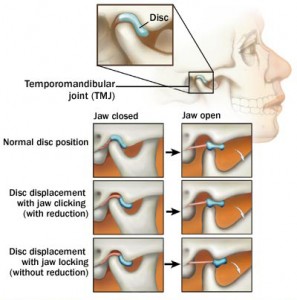
What Causes TMJD?
Researchers agree that TMJD falls into three categories:
- Myofascial pain discomfort or pain in the muscles of the jaw, neck, and shoulders;
- An incorrectly positioned or displaced TMJ meniscus or disc;
- Degenerative joint disease rheumatoid arthritis or osteoarthritis in the jaw joint.
Prior injury to the jaw including direct trauma and even car accidents are leading causes of TMJD. For example, anything from a hit in the jaw during a sporting activity to overuse syndromes, such as chewing gum excessively or chewing on one side of the mouth too frequently, may cause TMJD.
Both physical and emotional stress can lead to and cause TMJD to worsen. If you are feeling tension in the jaw and you are going to the dentist, you should let them know about this and they may consider using medications during the procedure to minimize the injury potential, or they may send the patient for Chiropractic or Physical therapy immediately after treatment. Sometimes, the Dentist may instruct patients in exercises they can do at home to loosen up the joint after the visit.
While emotional stress itself is not usually a cause of TMJD, the way stress shows up in the body can be. When people are under psychological stress, they may clench their teeth, which can be a major factor in their TMJD.
Some conditions once accepted as causes of TMJD have been dismissed moderate gum chewing, non-painful jaw clicking, orthodontic treatment (when it does not involve the prolonged opening of the mouth, as mentioned above), and upper and lower jaws that have never fit together well. Popular theory now holds that while these may be triggers, they are usually not direct causes.
Women experience TMJD four times as often as men. Several factors may contribute to this higher ratio, posture may be a leading cause.
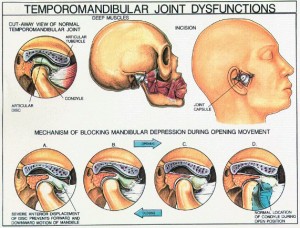 If you have heard of TMJ in reference to the Jaw, then you may have also heard of TMJD. TMJD, often also known as TMD. TMJ stands for Temporomandibular Joint. TMJD stands for Temporomandibular Joint Dysfunction and TMD stands for Temporomandibular Dysfunction, both are the same painful condition.